
We held the Bay Island Bonsai 9th annual exhibit this past weekend, and for the third year in a row Mas was a guest exhibitor. Boon gives him free rein to do whatever he wants, so last year he made an entirely contemporary display with his Suiseki Art piece “Akebono”. This year Mas chose to combine a very traditional suiban display with one of his recent paintings. After creating the display, he titled it “Silence” (静寂 seijaku).
When we were creating this display Mas first tried a more traditional approach, using a calligraphy scroll that his mother had given us. The scroll has the character 然 (zen) which comes from the word shizen, or “nature”. It didn’t look good – the calligraphy was very strong and overpowered the stone, stealing all the attention. On top of that, the meaning of calligraphy is an essential part of it – you aren’t using it just for its visual appearance. Something essential is lost if the great majority of viewers don’t know the meaning.
So we started looking at some of Mas’ recent paintings from last summer. This painting was not made with any intention of displaying it with a suiseki, but when we tried it with this stone and suiban we realized how well they complemented each other.
Mas deliberately avoided giving a descriptive name or label to either the stone or painting . Having a description such as “coastal rock” or “waterpool” limits the viewer’s own imagination. For me, this display is a memory of morning on the Klamath river, surrounded by forest, with the mist rising off the water. For a fellow BIB member (of more practical bent perhaps) the painting seemed like a micrograph of the stone itself.
Having a suiseki display among bonsai gives a moment’s rest while going though the exhibit. In the midst of the trees is a quiet clearing where you can gather your thoughts and go on refreshed.


 Posted by Janet Roth


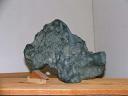
 He made a daiza for this stone following the traditional style taught by California (and also Japanese) suiseki artists. A seat is carved into the wood to hold the base of the stone (this stone has not been cut, so the base is not flat), small uniform legs are made under the major visual masses, and the rim is flat all the way around. In this style, the daiza acts as a simple platform for the stone. The legs show just enough to visually support the weight of the stone, but otherwise are intended to almost disappear from the normal viewing angle (which is looking down slightly on the stone). The idea is to show the stone, the daiza itself is not considered important.


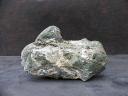
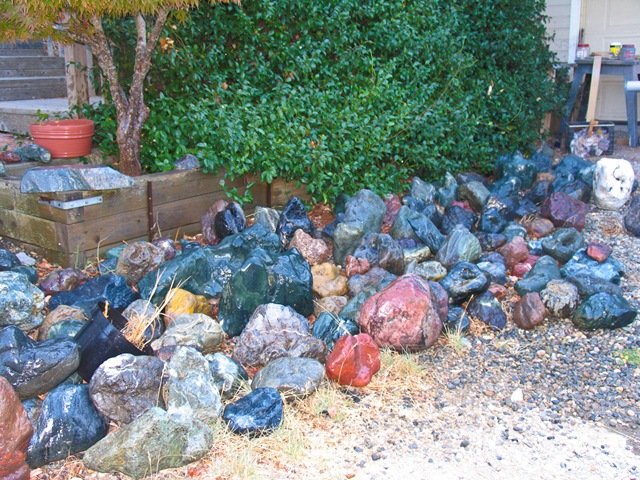
 I found this stone on the Klamath River, and left it in the yard for over 10 years in the wind, rain, and sun. I was expecting that this process, known as youseki, would clean up the stains and show the beautiful white snowy mountain. But after 10 long years there was little color change – in particular the gray did not change to white. The years of youseki instead gave it a wabi-sabi and aware feeling. Wabi-sabi in suiseki is an antique and rusty look, and aware is a feeling of pathos, sorrow, misery, and wretchedness all combined. (These are very important ideas in Japanese art and do not translate to English very well).
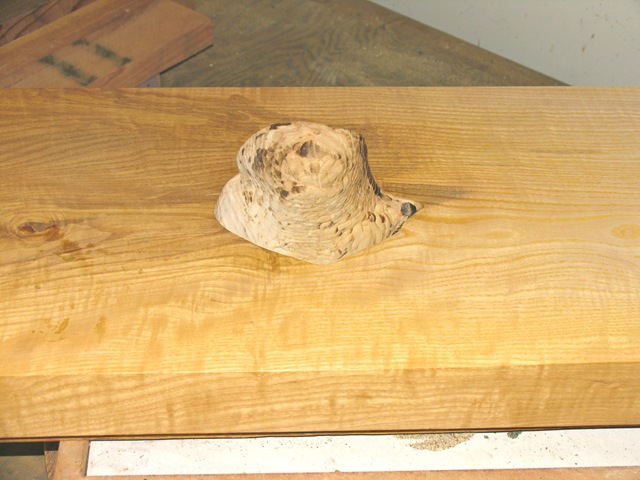
 the proportions and the grain seemed to complement the stone. I tried to position the stone very carefully, looking at the wood grain as well as the overall balance and composition. After setting the stone, I carved a deep hole and burned the wood with a blow torch. This is the first time in my suiseki art that I went beyond just staining and polishing the wood.





 Suiseki Art